
An ultimate guide for beginners on how to paint a panel door with glass (or not). Whether you're painting a wooden door again or painting bare wood, I'll help you pick the best paint for interior doors, rollers, and tips to prevent problems you might face. Includes an in-depth video tutorial for a helping hand.

I've painted quite a few 6 panel doors over the last few years in various different styles, woods and paints. I've also learned a lot of tips along the way from experience and from my YouTube viewers.
So, in my comprehensive guide, I'm going to compile a list of the best way to paint doors. And more specifically, how to paint a 6 panel door, such as:
- How to paint old wood doors
- Tips for painting a glass panel interior door
- How to paint a varnished door (treat it as paint when scraping)
- Advice on the best paint for painting interior doors with glass panels
- Prepping oak doors with glass panels or cheap internal doors
- How to paint a door without brush marks
- Tips on keeping the mess down while repainting internal doors
- How to strip and refinish a door, or remove paint drips/chips
- How to paint a door like a pro
- The same methods can also be used as an easy way to paint French doors
- This isn't just a how to paint interior panel doors - I'll help you find the right paint and tips for a front door too
- And MUCH more!

How to Paint Wood Doors Tools
- Old rags for dust and paint
- Carbide scraper for varnish, paint or removing damage
- Filling knife
- Wood filler with catalyst - perfect for small to deep bolt holes
- 1" paintbrush *Synthetic for waterbased, natural for oil based
- Masking tape
- Electric sander (orbital or palm)
- Chemical paint stripper for hard to reach places
- Plastic scrubbing sponge pads
- Degreaser/soap and water
- Combi drill
- Mini foam roller and tray
- Rubber gloves
- Dust mask
- Ear plugs or defenders
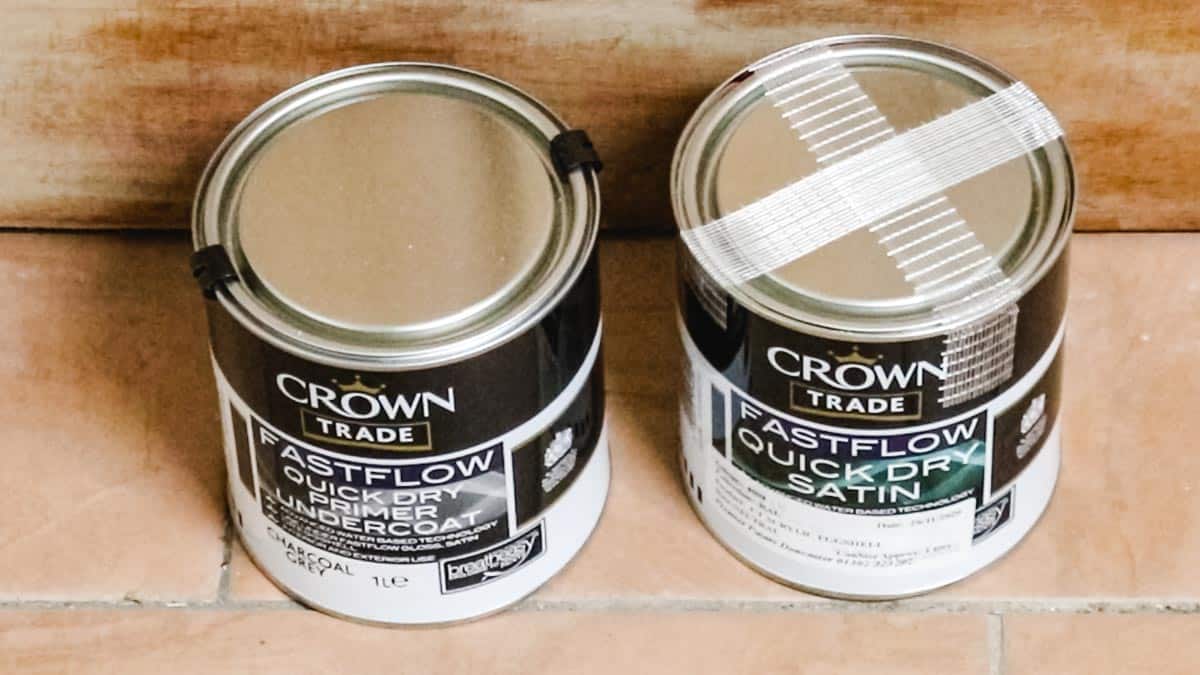
- Paint primer and undercoat *see notes below on types required
- Satin wood paint, professionally mixed to my desired colour *see notes below on types required
- Flexible sanding pads - 220 grit
- Stanley throwaway knifes

Do I Need to Sand Before Painting?
Before you start painting wooden doors, you need to ask yourself a few questions to ensure you find the easiest way to paint doors for your needs:
- If you have a prepainted door, is it flaky anywhere?
- Can you see brush strokes you don't want to see?
- Has it been painted several times over the years?
- Is the existing paint job sound?
- Are there any rough edges?
- Does the door close properly?
- What kind of paint do you want to use? *We'll cover this shortly as some furniture paint doesn't require any prep
In short, if the existing door paint or finish is poor, not smooth or there are many layer and you want the best finish possible, I recommend sanding or scraping it off first.
Painting internal doors that have history isn't a quick job and you'll find most of the time you spend is prep work. But at least you know you're more likely to have a professional hard wearing finish when complete.

Note For Painting Hollow Core Doors
When it comes to painting 6 panel doors that are lightweight for the first time (as seen in my how to hang a door tutorial before I started painting my door white), then you won't need to sand.
In fact, in most cases, you'll be painting pre primed doors, so you can save money on sanding, filling and skip to the final finish.
They're also easy for one person alone to unscrew and remove from the doorframe to paint away from site.
Do I Need to Prime an Already Painted Door?
If the paint job is in perfect condition, then no, you don't. I would suggest painting primed doors with a using primer undercoat if you want to repaint interior doors from white to black. And the same goes for painting mahogany doors white.
Save Time and Opt for a Self Priming Paint
If you want to save time on priming, then my local paint shop recommended Zinsser Allcoat Exterior Satin as it's water-based, self-priming paint and doesn't require any sanding.
Also, it claims to contain a chemical to protect the already dried paint against fungal degradation. It's suitable for internal doors too, but I didn't opt for this as they would have needed to order my colour in and needed a paint urgently.

How to Remove Paint From Glass Door Without Sanding
Over the years, I've quickly grown to dislike sanding my projects. It's messy, continuous vibration can cause Hand Arm Vibration Syndrome (HAVS), and creates noise nuisance for neighbours.
If Your Existing Paint Job Is Sound
Note: if your paint shop is generally in good condition, you only need to sand off shine to key the surface for good adhesion. A hand sander everywhere won't take long and you won't need to strip to bear wood, then be forced to prime.
Methods to Avoid Sanding (If The Old Paint is Bad or Darker Than the Colour You Want to Pick)
For those that aren't that so fortunate and want to avoid sanding, I've put together a handful of options here for you to consider using:
1. Use a Chalk Paint, Like Annie Sloan
Accept any flaws as character and use a chalk paint for a shabby chic look if it will look appropriate in your home, such as a farm house. You can find my homemade chalk paint recipe here if you're on a budget.
As the paint chips over time, it can interestingly reveal previous colours, as seen in my photograph of the official Annie Sloan shop in Oxford taken in 2015.
Important Tip: If painting glass panel doors as a front door, do not wax your chalk paint at all as it won't hold up in the rain. Go from chalk paint to varnish and don't wax in between as it won't adhere properly.

2. Use a liquid Sander/Deglosser
Another one of my favourite methods, although it can create gunky mess, is a liquid sander, AKA chemical stripper.
I prefer to keep substances down to a minimum, but it's ideal for brushing in hard to reach places. Many start to peel paint off within 30 minutes.
They can then be scraped or scrubbed off without sanding out any natural patina from the wood. It's also helped me avoid sanding scratches in my half glass interior door.
Important: You'll need to scrub everything clean with a degreaser before printing with primer, etc.

Try a Bonding Primer
Using a primer such as Zinsser or Polycell's Stop Stain can be useful to avoid bleed-through if you plan on painting a paler colour over a darker one.
Note: Polycell is extremely thick and very hard to sand down, leaving texture, but it does work. It appears Zinsser is finer to work with and I know lots of people who love it.
Also, the colour of your primer will affect the final colour you want to use. We'll cover this later in the post. But in short, avoid a dark primer if you want to paint and vice versa unless you want a slightly different shade.

Use a Carbide Scraper (My Favourite Method)
My chosen method is to use a carbide scraper. I call it my mini plane as it shaves off paint and varnish easily. Also, the shavings are harder to breath in, unlike a sander.
- It's very therapeutic to use
- It leaves a smooth surface underneath
- You don't need to learn how to sharpen the blades - just replace
- They come in different shapes and sizes
- It doesn't vibrate the hands continuously
- It' doesn't create a noise nuisance for neighbours, although can screech, hence my ear plugs
- No harmful chemicals
- The shaving time reduces any final sanding time significantly
How to Sand a Door For Painting
If you don't want to use any of the methods above and you think sanding a door for painting is vital, then:
- Use a palm sander or orbital sander to save your arms
- Start with a lower grit number, such as 120 grit and sand everywhere and repeat as you work your way up to 220 grip
- Note, sanding is a very laborious task, so avoid lower grits where possible, which will create more work for yourself
- If you decide to oil, then varnish your door two weeks later, scratches may later be visible, so it's vital you smooth scratches out
One of My YouTube Viewer's Top Tips For Prepping a Door:
One tip with Doors that I would pass on is .... a couple of wooden wedges! Put them in under the door from opposite directions so they put pressure upwards the depth of the door rather than one edge ;0)
Can I PVA Prior to Painting Wood?
Most professional painters and decorators will insist that sealing paint with a PVA solution is not recommended. The reason being is that, because it's water-based, it's likely to get wet and react with any future paint applied.
Do I Need to Remove a Door From the Hinges?
You'll find a modern glass door, or any solid wooden door is very heavy to work with. If you can unscrew the door at the hinges, then lay it on sawhorses to paint, then great.
However, with a little masking tape prep work on your internal door glass panels, I'll show you how to paint a door without removing it. *I don't recommend painting it outside as flies can be drawn to the paint, potentially ruining your work. Especially oil based paint, from experience.

How Do I Fill a Hole in a Door?
Depending on your finished look, there are many wood fillers on the market.
- If filling old bolt holes or where old door hinges used to be, use a hard wood filler with a catalyst as I am here that sets in 30 minutes before sanding
- If you're planning to oil, then varnish your door instead of painting, pick a filler that matches your colour
- If the dints are very minor, a cheaper filler without mixing a catalyst will suffice. Usually it will need longer to dry, but this is unlikely if your dints are shallow
To fill: pack the dint or hole with a filling knife and leave it proud (slightly raised on top of the surface), so you can sand back to the same level as the door. Some may shrink, so you may need to repeat.
YouTube Subscriber Tip
Cuprinol 2 part filler gives you 30 minutes working time if you need longer working time, Ronseal & everbuild go off in 5 minutes

Prepping For Glass Door Painting
If you have glass panel interior doors, then I highly recommend taking the time to masking tape them up. This is much easier if you have a door with one glass panel, of course!
It's almost impossible to completely avoid bleed through, but by masking taping up your interior glass panel door, it will significantly reduce clean up time.
Or, if you have patience, sometimes I use a piece of card with a straight edge or plastic card and hold it against it while I paint. But, I find I need to wipe the edge off refrequently - usually on my trousers(!)
Note: it's not a good idea to assume you'll be ok scraping everything off later as it can scratch the glass. Also, turps isn't always quick to work with.

Should I Remove Door Handles Before Painting?
I've painted doors after masking taping up the handles and removing it. So here's my verdict.
I think removing handles first gives a much more professional finish as opposed to painting up to masking tape. Why? Because:
- You won't have to worry about whether you've painted right up to the handle
- No worrying about whether you've masking taped a mm or two of the door as well as it will show once removed
- Or worry about accidentally peeling off your paint while removing the tape
Important Removing Handle Tip
In an ideal world, you should unscrew the latch form the door to prevent accidentally locking yourself in or out of a room.
I decided to wedge a hoover part in the door way as our door had split wood where the latched was screwed in case I created more work for myself.
How to Paint Paneled Doors
What Is the Best Paint for Doors?
How to paint panel doors using the best paint for internal doors really depends on on a few factors. Here's a few Q&A's to help you in a hurry.
Do you want a professional finish when using paint for wooden doors?
Try to use an oil based paint for internal doors if you can as brush strokes tend to smooth out. BUT, oil based isn't the best white paint for interior doors. White can turn yellow with UV light, so choose one that says non-yellowing.
Do you need something touch dry within a couple of house?
Pick a water based paint as oil based usually need a minimum of 12 hours to dry.
Do you need to close the door within a day or two?
It may sound silly, but curing times for oil based paint is up to a week with temperatures of 10 degrees celcius or more. Curing times for water based paint varies from 2 to 4 weeks, so can stick to your door frame.
Does your dog scratch the doors?
In general, I find painting doors with gloss paint that are oil based is more hardwearing to wear and tear.
Are you looking for a paint that is easy to clean up when finished?
The biggest benefit about waterbased paints is that you can clean your brushes with hot water. Oil-based is hard to remove as it's so greasy.
I don't always have the patience for cleaning brushes, but storing them in a food bag can slow down oil based from drying out if needing to continue the next day.

What Paint Finish Should I Choose?
There are a few different types of paint finishes you can choose to paint wood doors in either water based (acrylic) or oil based. To help you they are:
- Gloss: gives a high sheen and is great for being hardwearing and durable in high traffic areas. It also withstands regular cleaning
- Satin wood: I find this semi gloss finish is also hardwearing and durable, making it just as easy to clean *I think this is the best paint for wood doors
- Eggshell: is a bit less glossy than satin wood. The colour also doesn't bounce back as much as the more reflective paints above
What Colour Primer Should I Use?
I've found it is down to personal preference when choosing an undercoat as it can affect the final colour you use
As a rule, you should:
- Pick a white when using pale colours
- Use white if you want the paint to pop
- If you want a rich final colour, use a darker primer and undercoat such as grey or silver, which will make your final paint a shade or two darker
- Some decorators online recommend grey or even black undercoat when painting a red door
My best advice is to always paint on scrap wood first with different base colours, such as tester pots to avoid any surprises.

Is it Better to Paint a Door With a Brush or Roller?
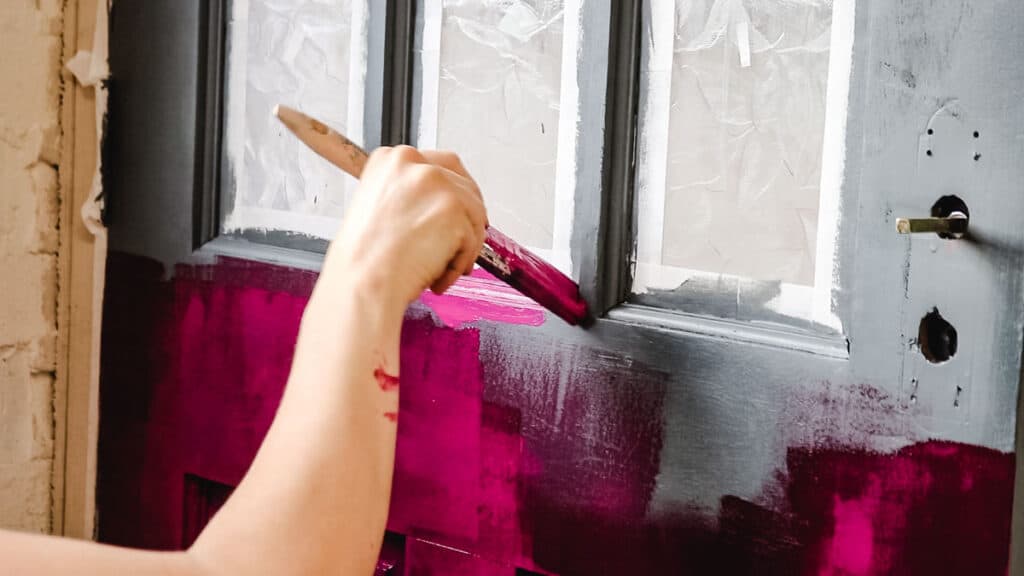
The best way to gloss a door is to use a mix of brushes and rollers while painting panel doors. You'll need to use a 1" paint brush first to "cut" the door, meaning, painting tricky areas.
Then use a foam roller over the brush strokes to blend in. A high density foam roller is best for gloss finishes to avoid brush strokes.
If you use wool rollers, you'll be left with wanted texture, which is more suitable for painting emulsion on walls.
What Type of Paint Brush Should I Use?
When painting with water based paint, use a synthetic paint brush for cutting the paint. There are more hairs in them and they bounce back easier, giving a more professional finish.
If you're painting with oil based paints, opt for a natural paint brush as they load a lot more paint on them. This would prove hard to be precise when using water based door paint.
If you want to know how to spray paint interior doors, then I have a Wagner paint sprayer review here. However, I'm yet to find a paint fine enough that will work and not clog it up.
What is the Correct Way to Paint a Door?
After cutting with a paint brush during your undercoat stages, I then can then go over everything with a roller.
Once both sides are done, I then focus on the sides. As for the hinges, sometimes I do paint them where the screws are, but not the parts exposed.
Then leave each coat to dry as per their instructions.
Sanding Between Coats
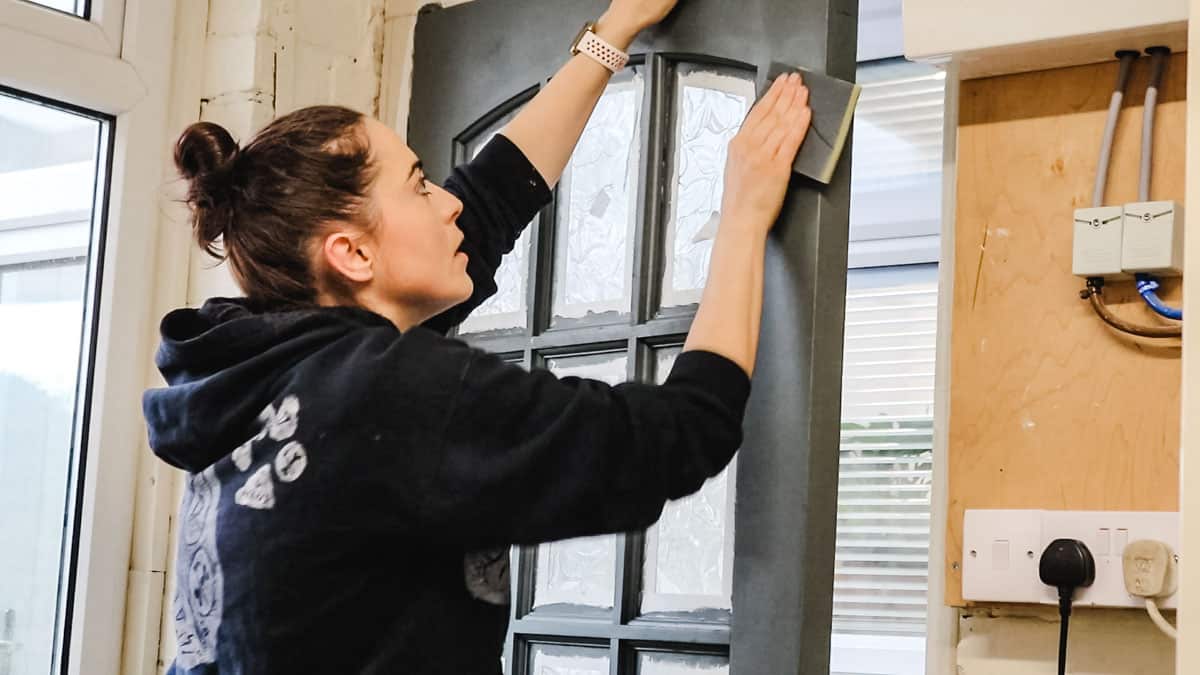
After each coat is dry, I very lightly sand away any flecks or dust particles that may have got mixed in my paint.
I recommend using flexible 220 grit sanding pads as they're perfect for finishing, not too abrasive. Then patch up where you see any exposed wood through the undercoat.
Once fully dry, it's time to move on to your desired paint colour.

Can I Use a Hairdryer to Dry Acrylic Paint?
For any patch ups I did with my acrylic undercoat, I used a hair dryer to speed up the process. This only works if the paint is in fine coats. If you have drips, the hairdryer will make them travel, making a mess. You're better off wiping drip marks off, going over with a brush again, then drying.
Also, run the dryer around 2 inches away, moving side to side. Also, if you're wondering, a hairdryer isn't sufficient as a heat gun.
Once you've painted your door to a level you're satisfied, add the handles back once dry.

When Should I Take Masking Tape Off?
For doors, I personally leave the paint to fully dry over night. That way, I can inspect my work before making a decision to remove.
In contrast, I've found it's safer when removing off painting walls, to remove while the paint is wet.
Why Does Paint Come Off With Masking Tape?
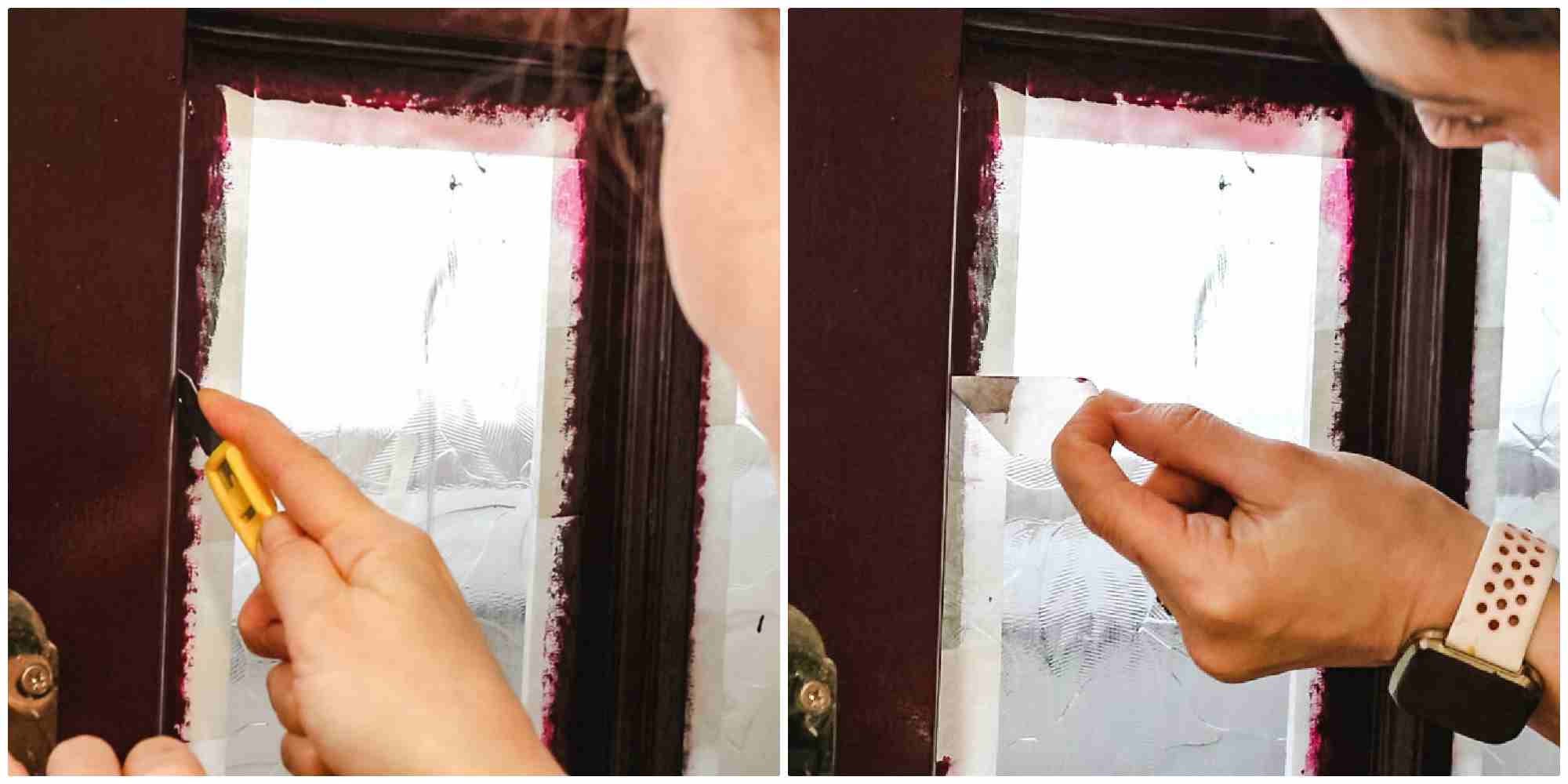
The reason you might be experiencing paint coming off while you remove masking tape off painted door windows, is because it's formed a solid coat over it.
To avoid, I carefully break the painted lip by scoring with a stanley throwaway knife on an angle. Ot anything with a sharp edge, like a plastic filling knife. I do this on an angle when painting doors with window panes as I want to avoid scratches.
How Soon Can I Close My Door After Painting?
One of the key concerns when painting a door with glass panels, or any door, was whether the paint might stick to the door frame. (I forgot to tell my husband, which gave me more work to do!)
The photo happened even after 24 hours of drying. So, it lead me to question:
How Long Does it Take for Paint to Cure?
As mentioned earlier, when painting a panelled door, oil based up to 1 week, water based can be 2-4 weeks with temperatures from 10 degrees and the humidity.
As a rule, do a test by seeing if you can make a slight dint with your nail. If you can, the paint isn't ready and needs more time to dry.
If you need to paint a front door, I recommend you do it on a much warmer day, say on a Summer's morning. Or, hang a temporary one while you restore and paint a door indoors, space permitting.
Painting a Panel Door YouTube Viewer Tip
When my husband painted our front door in our first house it drove him mad. He would leave it open for as long as he could however when we needed to close it in the night though it had dried it wasn't cured and kept taking a strip of paint off down the side. In the end, we researched and found if you put greaseproof paper down the side while it is curing it prevents it sticking and it worked 🙂
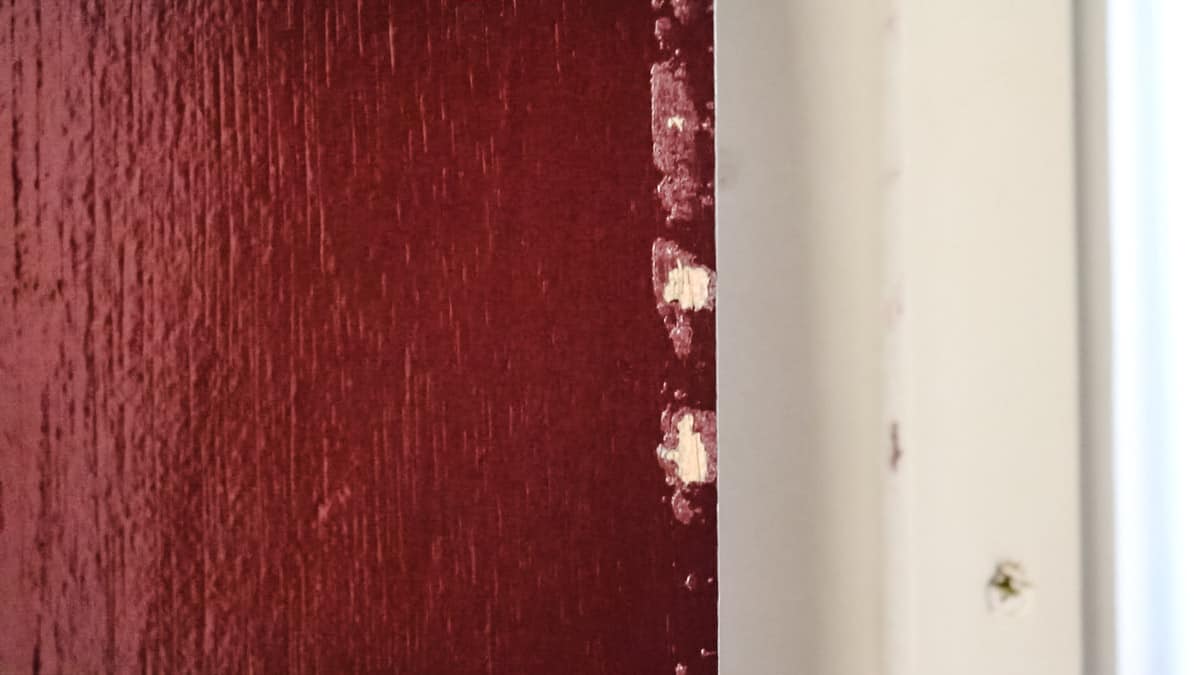
How to Repair Chipped Paints or Drips Marks
If you have chipped paintwork or drips on your newly painted door, then to remove:
- Gently sand back to make smooth with as fine a sandpaper you can work with, like 220 to prevent wearing good paintwork if necessary
- Use filler to fill any chips if you have them and leave to dry
- Sand the filler back until smooth
- Touch up with primer and undercoat, leave to dry
- Roll on your coloured paint and repeat until matches
- Make sure the door doesn't close again until absolutely dry
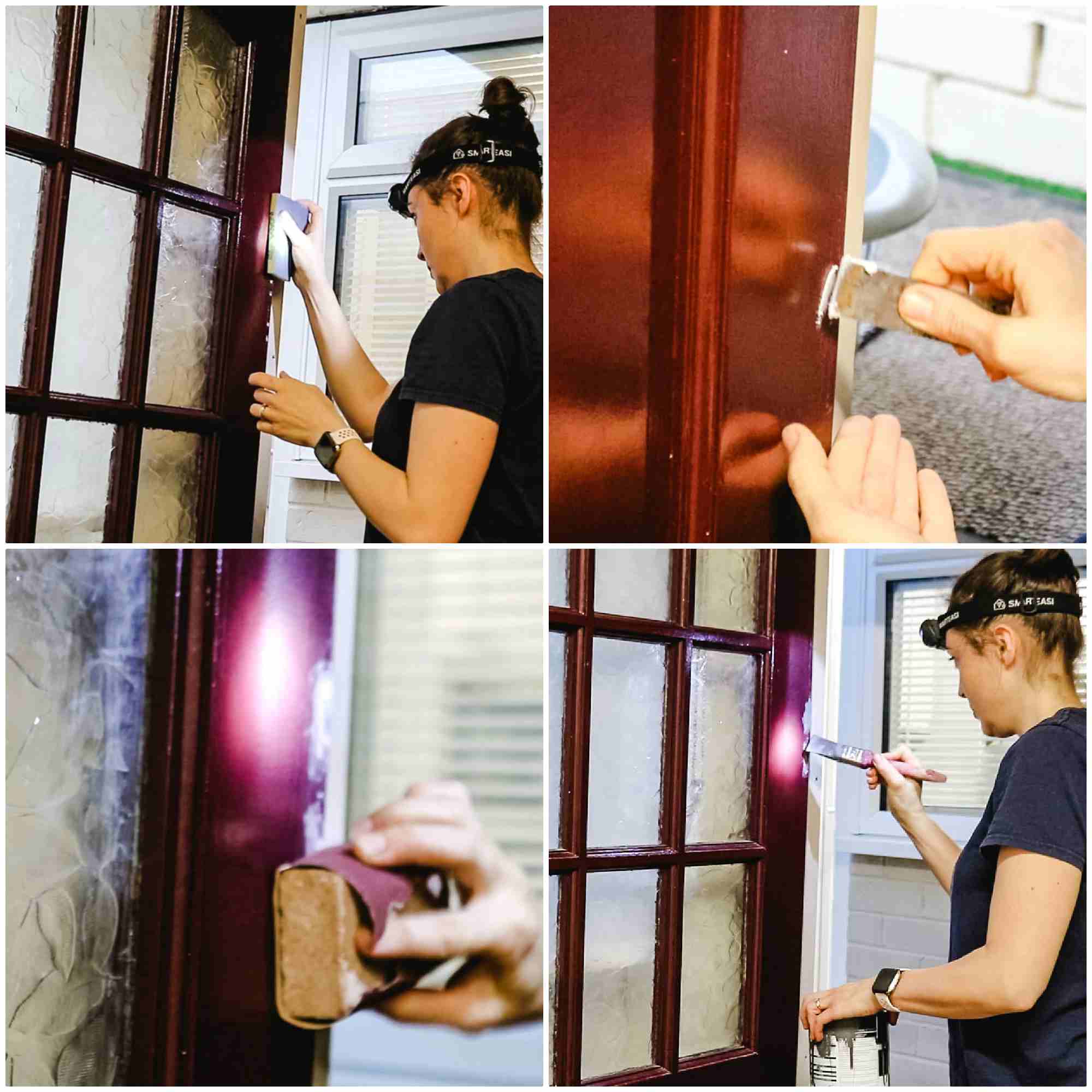
How to Remove Paint Off Glass
Once the paint has fully cure, it can be very difficult to remove. First, I left the paint to dry after 24 hours and removing the masking tape.
Then immediately, but scrubbed any paint bleed through I had. But, I wouldn't rub too hard or too close to the puttied door windows.
Important Tips For Painted Glass Doors:
- Avoid using a paint scraper on painted glass panels as it can scratch the paint.
- Don't use a nail varnish or stripper as you could remove paint you want to keep

What is the Best Varnish For Interior Doors?
Just a heads up: when painting gloss doors, there's no need to varnish or seal it. You might find this more suitable when painting with a lesser hard wearing paint.
Or, if you've decided to oil your door, say with Danish oil, then waited two weeks for it to dry fully before varishing.
But, one that is recommended by many, is Ronseal's Diamond Hard interior varnish in clear.
How to Paint on Glass
If you want to paint the glass on inside doors too, then I have a how to frost glass tutorial here for when I had a house with white gloss interior doors.
I certainly wouldn't key the glass with sandpaper in case you ever want to take off. But I would definitely use a foam roller.
Then I'd make a decision about whether I wanted to use the same paint as glass is see-through and will let light in. If you can recommend the best what the best paint to use on glass is, then please leave a comment!
Similar Posts to How to Paint a Glass Door
- How to restore oak furniture easily
- Fitting architrave for doors
- How to frost glass
- How to change a UPVC door lock in a minute
- Knocking a wall through for doorway
- How to decorate a room (beginner's guide)
- Painting around a mirror
- Spring door stop installation
- Datacolor Colorreader EZ review
- Replace a uPVC door handle


How to Paint a Panel Door With Windows
How to Paint a Panel Door With Glass

An ultimate guide for beginners on how to paint a panel door with glass (or not). Whether you're repainting a door or painting bare wood, I'll help you pick the best paint for interior doors, rollers, and tips to prevent problems you might face. Includes an in-depth video tutorial for a helping hand.
Materials
- Old rags for dust and paint
- Wood filler with catalyst - perfect for small to deep bolt holes
- Chemical paint stripper for hard to reach places
- Masking tape
- Plastic scrubbing sponge pads
- Degreaser/soap and water
- Paint primer and undercoat *see notes below on types required
- Satin wood paint, professionally mixed to my desired colour *see notes below on types required
Tools
- Carbide scraper for varnish, paint or removing damage
- Filling knife
- 1" paintbrush *Synthetic for waterbased, natural for oil based
- Electric sander (orbital or palm)
- Combi drill
- Mini foam roller and tray
- Rubber gloves
- Dust mask
- Ear plugs or defenders
- Flexible sanding pads - 220 grit
- Stanley throwaway knifes
Instructions
1. Remove any flaky paint by sanding, scraping or use a chemical stripper. If the paint job is sound, keying with sandpaper is fine. Note: you'll find a full step by step video to follow along if you need more support: https://www.youtube.com/watch?v=Lz-dKHRBVE8
2. Fill and sand any dint and holes.
3. Ensure your door is clean by using a degreaser, leave to dry and make sure it's dust free.
4. Masking tape any surface and windows you want to protect from paint to minimise clean up.
5. Using a primer (read post about colour choices) by cutting with a paint brush, printing in the chamfered grooves.
5. Use a HD foam roller and paint everywhere else, including running over where you went with a brush to remove brush strokes and leave to dry.
6. Sand where dust particles or flecks with 220 grit sand paper, then patch up anywhere you see bare wood.
7. Leave to dry, then paint with your colour - repeat light sanding in between until you have good coverage and leave to dry.
8. After drying for 24 hours, carefully score and peel away the masking tape. But don't close the door until you can no longer create a slight dint with a nail in the paint.
Pin How to Paint a Wooden Door


Przemyslaw Dankowski
Great tips! Your tips can make the paintwork very much easier. Thanks for sharing these tips!